|
 |
 |
 |
 |
 |
 |
 |
 |
Robotic Cutters
for Drain Liners
Last updated 5 January, 2014
draindomain.com > site map > cipp drain lining > defective drain liners
When Drain Liners Go WrongWhen done correctly using the right materials and technique drain lining can save major disruption and upheaval whilst delivering a permanent and quality repair, when liners are poorly installed they can cause untold problems and usually in areas not related to the initial problem, an excavation can often be the only way of removing the defective liner. Liners can and do go wrong occasionally and it has happened to the best of us, it is usually down to human error, inexperience or a ground water issue that you were not aware of but in truth it has never been easier to install a cipp liner system. Modern materials and resins are reliable and can be ordered in pre-measured and mixed quantities taking all the risk out of the calculation and mixing process, an area that was always prone to disaster when liners would start to cure when only half installed. Typical defects on liners are due to;
|
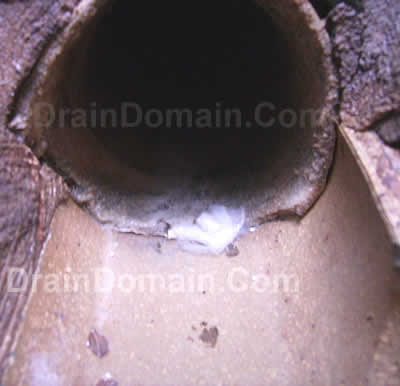
The image to the right shows a poorly installed liner end on the outlet of a manhole, the jagged edges at the base of the liner caused a build up of paper and waste until the system eventually blocked. |
| related pages - removing defective liners |
 The worst liners we come across are simply down to poor workmanship and the guys are either trying to do too much in one day or they are on job and finish so anything goes, there is a certain element in the industry who move from one company to another on a regular basis so they have little regard for the long term result of a poorly installed liner. We then have the contractors who will reline anything in order to raise an invoice even though there comes a point on any system where defects such as stepped joints or a severely dipped line are beyond a Cipp liner repair.
 |
 |